Carpentry and Trim Work in Thornhill
Something made of wood in your Thornhill house is loose, missing, gapped or sticking, and the job is too small for a renovation company to take on.
Yes. We do small finish carpentry across Thornhill: baseboard and casing, crown moulding, closet shelving, sticking drawers, and repairs to stairs and railings. Most of it is measuring, cutting tight joints and fastening into framing. Structural work, such as cutting into a load-bearing wall, is not handyman work and may need a permit.
On this page
- Which carpentry jobs have their own page
- Closet shelving built to carry weight
- Matching door casing in older houses
- Crown moulding and textured ceilings
- Drawers that stick, sag or fall off their runners
Get a quote for this job
Which carpentry job do you need?
Two jobs have pages of their own. For new baseboard, shoe moulding or casing through a room or a whole floor, read baseboard and trim installation.
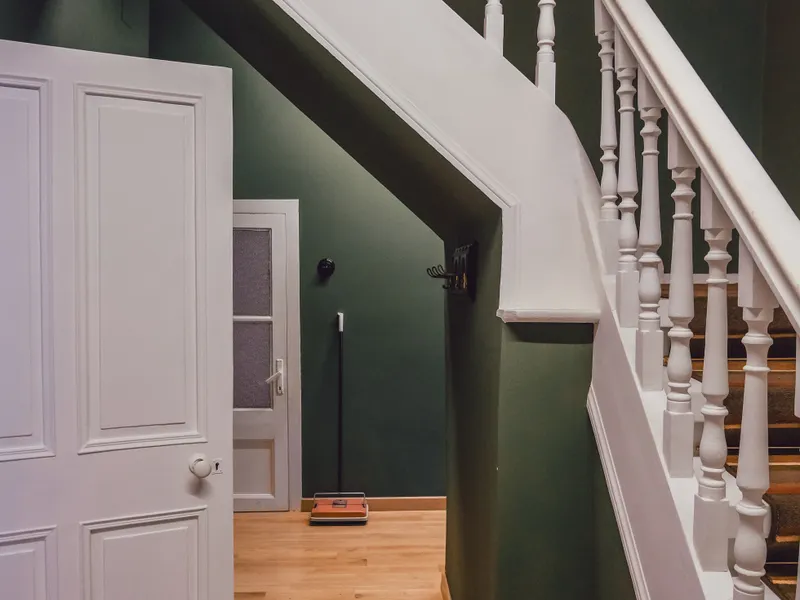
For squeaky treads, a rocking newel post or loose balusters, read stair and railing repair.
Can you build shelving inside a closet?
Yes. Closets in 1960s to 1980s houses usually came with one shelf and one rod, which wastes half the height.
A solid closet shelf sits on 1x3 wood cleats screwed into the studs along the back and both sides. The shelf itself is 3/4 inch melamine or plywood. Past about 3 feet of span it gets a centre bracket, or it bows under folded sweaters within a season.
A second rod at half height doubles the hanging space for shirts.
Can you match the casing in an older house?
Usually. The 2 1/4 inch colonial casing found in Thornhill houses of the 1960s to 1980s is still a stock profile, so one damaged side of a door frame can be replaced without redoing the room.
New casing is set back about 3/16 inch from the edge of the jamb, and the mitres are glued and cross-pinned. A mitre that is only nailed to the wall opens in its first heating season as the wood dries.
The few 19th and early 20th century village houses have wider casing that no store carries. That gets built up from flat stock and separate mouldings.
Paint in houses built before 1960 is likely to contain lead, and paint up to 1990 may. Old trim is cut and removed with as little sanding as possible, and any sanding needs dust control.
Is crown moulding a handyman job?
In a normal room, yes. Inside corners are coped: one piece runs square into the corner and the next is cut to its profile. Room corners are rarely a true 90 degrees, and a coped joint hides that where a mitre would gap.
Crown is nailed into the wall's top plate and the ceiling joists. Where joists run parallel to the wall there is nothing above to nail to, so a backer strip goes up first.
Crown needs a flat ceiling to sit against. If your ceiling has popcorn texture from before the mid-1980s, it can contain asbestos and must be tested by a lab before a strip is scraped away.
Why do drawers stick, and can they be fixed?
- Wood runners worn into grooves. The drawer drops and drags. A thin hardwood strip glued to the runner brings it back to height, and paste wax lets it slide.
- A sagging bottom. The thin panel has slipped out of its groove. It is glued back, or flipped over if it has taken a bow.
- Failed metal slides. Bent or missing bearings mean new slides of the same length and type.
- Summer swelling. Humid months swell a tight drawer. The binding edge is planed, then sealed so it doesn't take on moisture again.
What needs a permit or another trade?
Removing or cutting a load-bearing wall and rebuilding stairs are structural jobs. They can need a building permit and an engineer or licensed contractor. Permits come from Vaughan if you are west of Yonge and from Markham if you are east.
Inside the two heritage conservation districts of the old village, exterior woodwork such as porch trim can need a heritage permit.
Carpentry & Trim questions
Can a damaged piece of trim be repaired without replacing the whole length?
Yes. The bad section is cut out over a stud at an angle and a matching piece is glued and pinned in.
Can you do carpentry in a condo?
Yes. Ask your property manager about work hours and where cutting is allowed, since a mitre saw is loud and makes dust.
Describe the wood job, however small
Send photos and rough measurements through the quote form. For trim, a close-up of the existing profile lets us find a match before the visit.